Cybersecurity Expert Warns The Biggest Target for Cyber Threats Is You
Written by Alexis Jewel Marchand
Originally published by Northeast Valley News. This version reflects the author’s original, unedited article. https://nevalleynews.org/20328/news/national-cybersecurity-expert-located-in-the-valley-warns-the-biggest-target-for-cyber-threats-is-you/
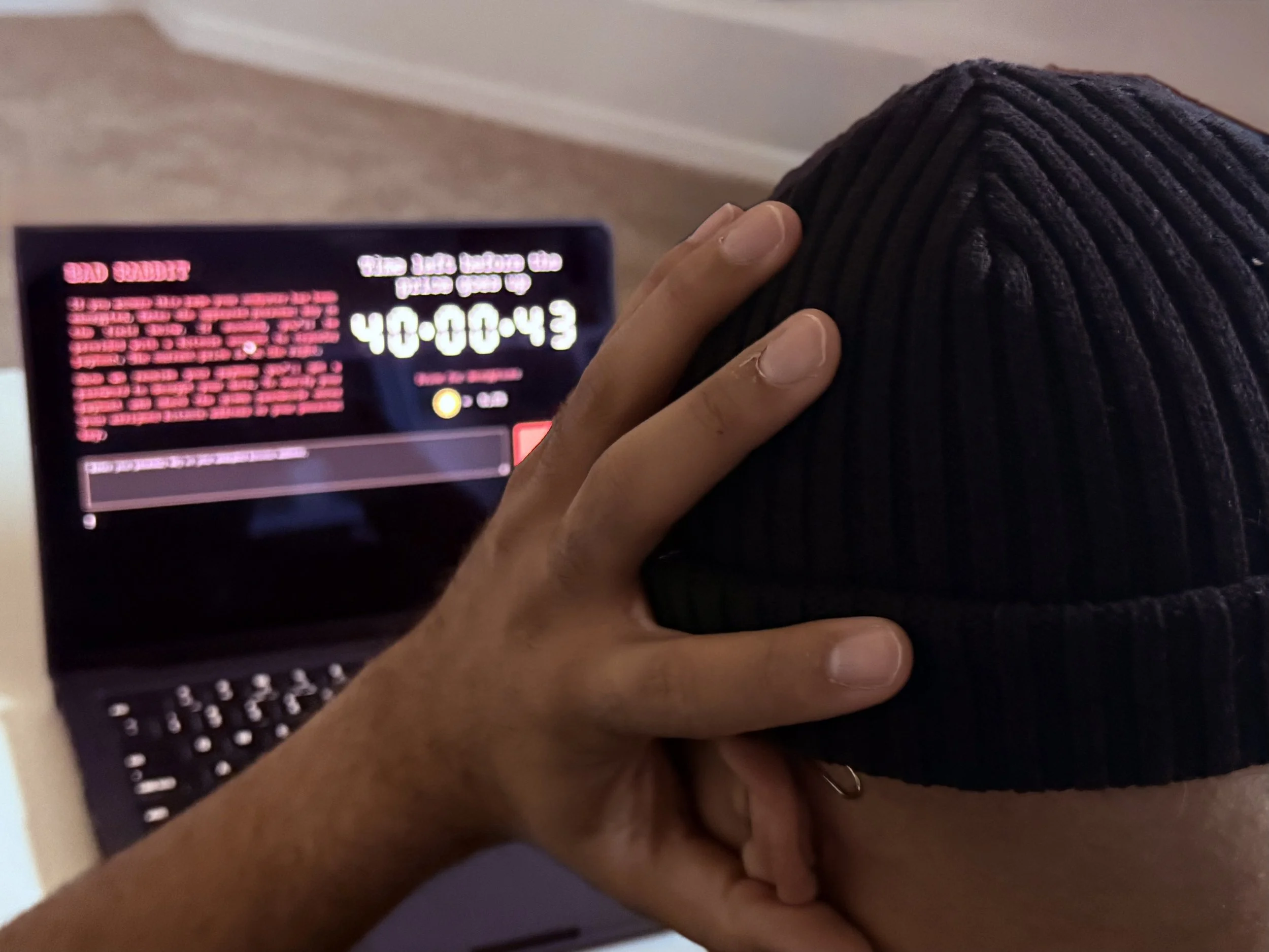
Man stressed after being hacked // Photograph by Alexis Marchand
Falling victim to a malicious phone call or fake email scam can cost a person thousands. Cybersecurity expert Oliver Clinch says , the biggest targets aren't corporations, they are everyday people.
Oliver Clinch, head of cybersecurity at Ports America, the largest U.S. stevedore company, starts his mornings scanning threat alerts and intelligence reports from government and industry partners. His team searches for data breach warnings and blocks malicious internet addresses before they reach employees. “It’s a continuous uphill battle,” he said. “You close one gap, another opens.”
While most people imagine hackers targeting large companies, Clinch says that it is everyday people who are the easiest targets. “It’s a lot easier to exploit trust than to beat enterprise defenses,” he explained. Financial scams, particularly those aimed at the elderly, are rising due to the use of AI. Attackers pose as officials and warn victims they could face legal trouble unless they send money. “They play on fear and urgency,” Clinch said. “People rush to act before verifying if the call is real.”
To stay safe, Clinch urges users to ignore unknown numbers and confirm bills or warnings directly with companies through official websites. He recommends enabling multifactor authentication on more sensitive information, such as banking, health-care, and email accounts, by using unique, lengthy passwords stored in a password manager. “Sixteen to twenty-four characters make it nearly impossible to crack,” he said. “The longer, the better.”
Artificial intelligence is reshaping cybersecurity for both sides. “It’s a double-edged sword,” Clinch said. Hackers use AI to script new attacks and clone voices for phone scams, while defenders use AI to sift through millions of alerts in minutes. Clinch advises caution about sharing personal images or recordings online. “Your voice and face are now part of your digital identity,” he said.
Clinch’s final advice is simple but leaves a lasting impression: “It sounds funny, but the more paranoid you are, the safer you’ll be.” The world is more connected every day. Protecting your privacy protects you.”