Rising RAM Prices Push Consumers to Think Twice About Upgrading Their PCs
Written by Alexis Jewel Marchand
Originally published by Northeast Valley News. This version reflects the author’s original, unedited article. https://nevalleynews.org/20425/showcase/rising-ram-prices-push-consumers-to-think-twice-about-upgrading-their-pcs/
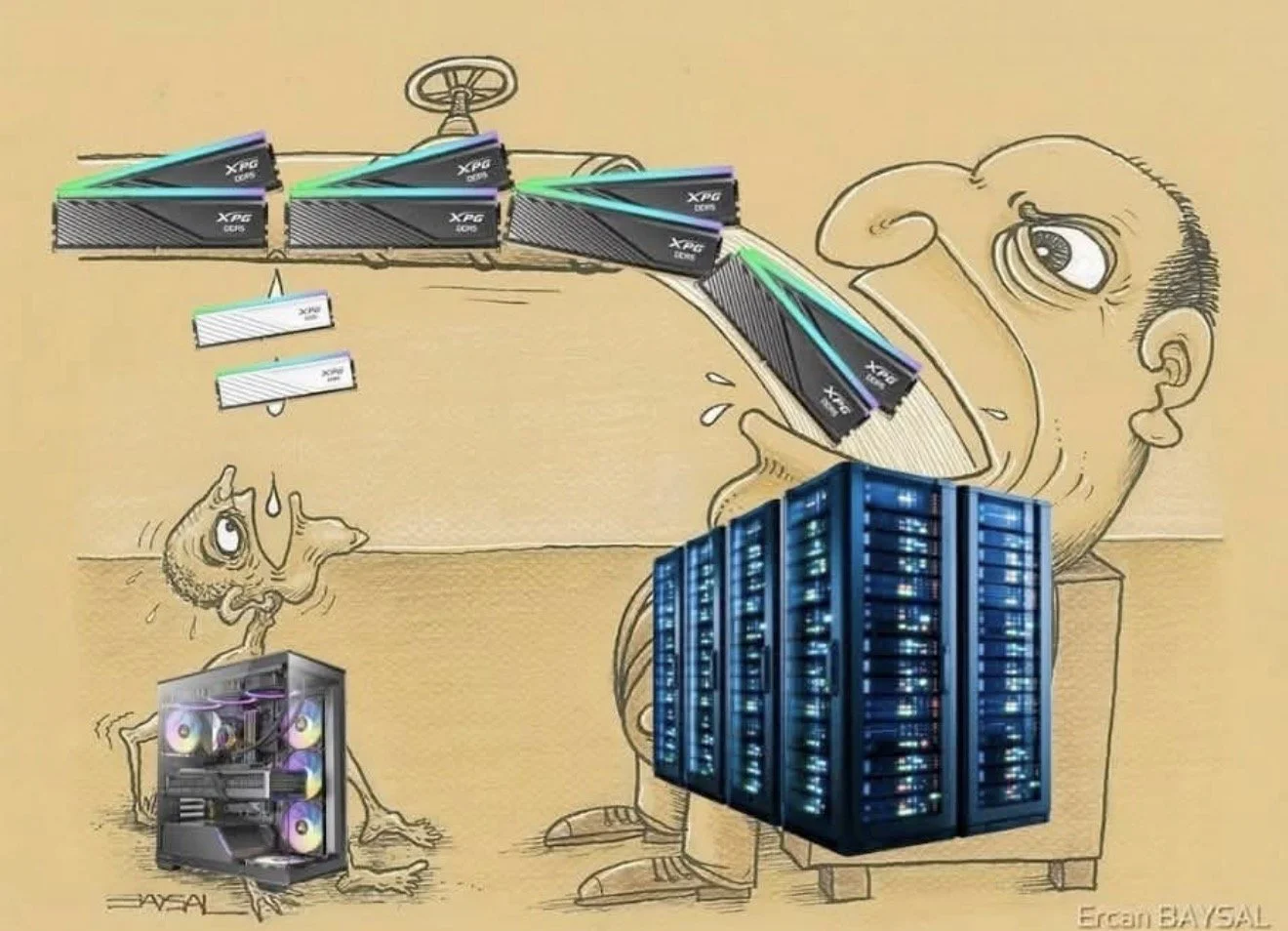
Illustration by Ercan BAYBAL, originally shared on Facebook.
Increasing prices for PC memory are forcing consumers to rethink when and how they upgrade their computers. From everyday PC users to hardcore gamers, people across the Valley say higher RAM costs are changing purchasing decisions and making once-affordable upgrades harder to justify.
IT professionals at NXP and shoppers at Micro Center said rising RAM prices are affecting how they upgrade their PCs. Several people interviewed believed the price increase was due to large corporations buying up available memory, driving prices higher as demand exceeds supply. As prices continue to climb, consumers are delaying upgrades, buying used PC parts, or scaling back their builds altogether.
Brian Gulli, an IT team lead at NXP who recently completed a PC build costing more than $5,000, said he has seen RAM prices increase dramatically firsthand over the past year. Earlier this year, Gulli purchased 64 gigabytes of RAM for about $180. When he recently rechecked prices, that same kit was selling for nearly $780.
“Earlier this year, I bought 64 gigabytes of RAM for about $180,” Gulli said. “That same kit is now around $780.”
Gulli said the increase forced him to compromise on a recent build for a family member. Instead of installing 64 gigabytes of memory, he opted for 32 gigabytes to keep costs down.
“Normally I would have gone with 64 gigabytes,” Gulli said, “but I ended up choosing 32 because prices are so high.”
While prices remain elevated, Gulli said students can still get by with less memory depending on how they use their computers. He explained that 16 gigabytes of RAM is generally sufficient for schoolwork, web browsing, and basic multitasking. However, he warned that more demanding tasks, such as graphic design, photo editing, or computer science-related coursework, require significantly more memory to run smoothly.
An IT professional who asked to remain anonymous said buying used PC parts is one of the best ways consumers can avoid paying inflated prices. He recommended online marketplaces such as Facebook Marketplace, Craigslist, and OfferUp as places where buyers can sometimes find quality used parts at lower costs.
“I would wait until prices come down or buy used to save money,” the IT professional said.
Shoppers are also noticing the increase firsthand. Greg Munlawin, a PC builder who recently visited the new Micro Center in Phoenix, said he was shocked by how expensive RAM has become. He said seeing the prices in person made him reconsider upgrades and how he plans to approach new builds.
While opinions vary on whether now is the right time to buy, most interviewees agreed that prices have made upgrading more difficult. For many consumers, delaying purchases, scaling back builds, or turning to used parts has become the new strategy until prices stabilize.